
An INTERVIEW with Jean-Francois FEILLET, Director QSE and CSR, Maison Chancerelle, France
Contributor: Ethic Ocean
Chancerelle is a family-owned company based in Brittany specializing in canned fish preparation. Its flagship product is sardines, sold under the Connétable brand. Like all players in the canned fish sector, the Douarnenez-based group will have to comply with new traceability requirements starting in 2029, when the new European regulation comes into force. Producers of canned goods and seafood processors will then have to meet obligations already applied to fresh and frozen seafood operators. Jean-François Feillet, the group’s Quality and CSR Director, explains the steps already taken and the challenges ahead.
Small pelagics and tuna: the star products of canned fish
We market small pelagic fish that we can in our two canning factories in Douarnenez and in another facility we own in Agadir, Morocco. We are the leader in sardines in France, with 42% of the retail market. We also sell tuna, mainly albacore tuna, where we are also number one on the French market.
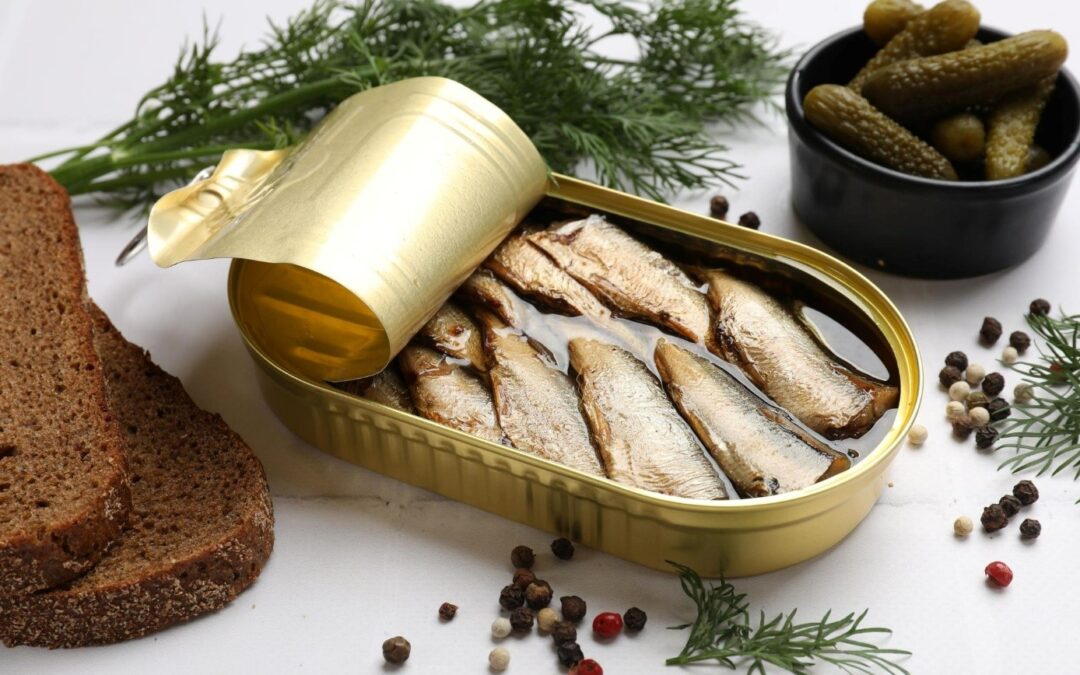
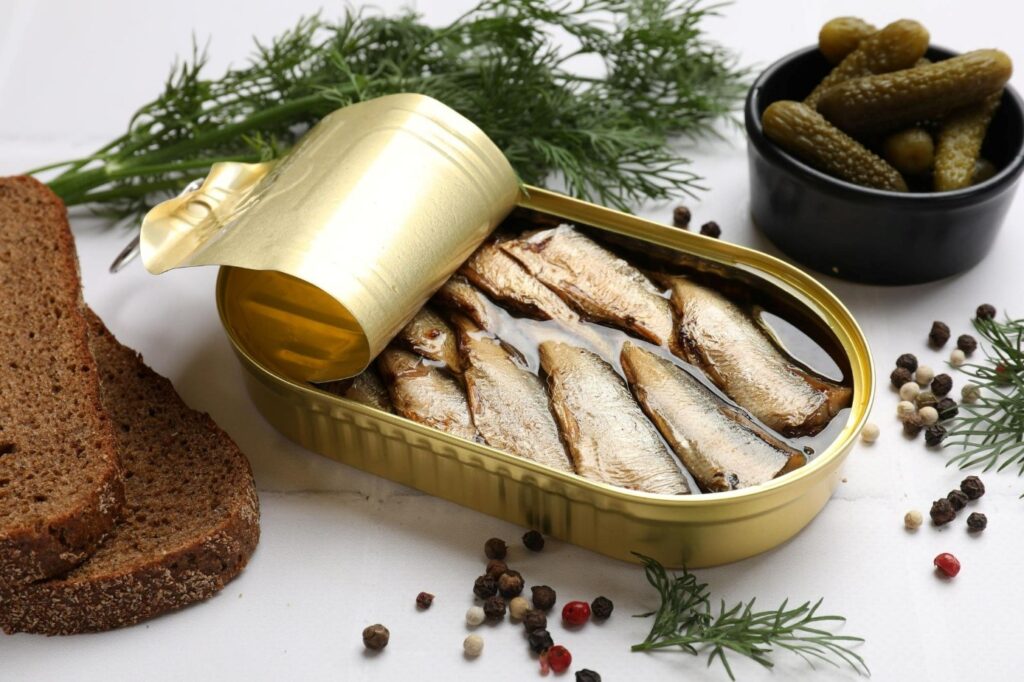
We also sell other products such as sprat and cod liver. We outsource production to partners located near fishing areas to ensure optimal quality, as these fish must be canned immediately after being caught.
Products mainly sourced from European waters
Sardines come from various European stocks: mainly the Bay of Biscay, as well as some from the English Channel and the Celtic Sea, with vessels landing in Boulogne-sur-Mer or Cornwall.
We also source a small amount from the Iberian stock via Portuguese suppliers. This stock was overfished but is now recovering, with catches becoming significant again – today even higher than in the Bay of Biscay. We also have suppliers in Morocco who mainly supply our Moroccan factory.
We also have a partner in Croatia. There are significant sardine fisheries in the Mediterranean although the stock is overexploited and catches have become very difficult.
Sourcing mackerel has also become challenging. We mainly work with Label Rouge certified canned fish, which requires using only fresh – not frozen – fish, as freshness ensures better organoleptic quality.
We source mackerel from Ireland and Scotland, not France, because French quotas are extremely low and do not allow for sufficient regular supply. Yet consistent supply is essential when working with fresh fish. Mackerel has been a difficult product for several years, and things are not improving as stocks are overexploited. Catches have dropped significantly and prices have risen sharply.
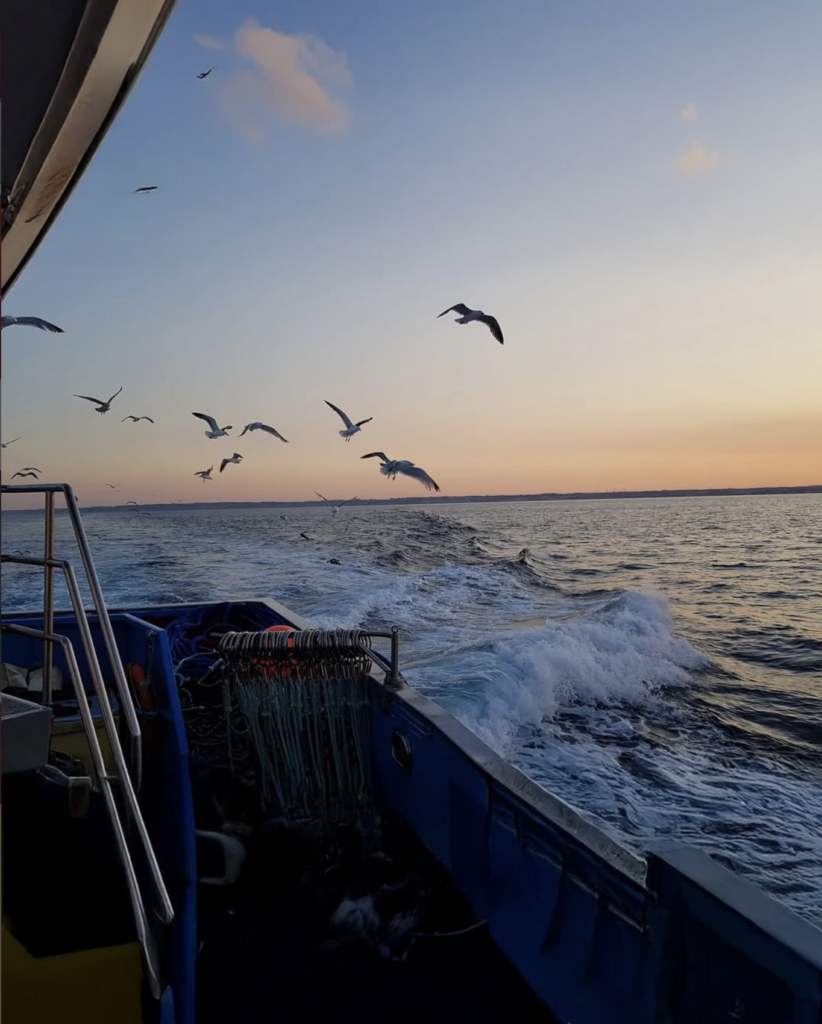
Credit: Connetable France
Albacore and tropical tuna: origin and fishing methods
Our albacore tuna comes exclusively from the Northeast Atlantic, from the Bay of Biscay up to northern Scotland and Ireland. As for tropical tunas – yellowfin and skipjack – we potentially source from all global stocks, whether in the Pacific (east or west), the Atlantic, or the Indian Ocean, depending on the period.
We had temporarily stopped sourcing yellowfin tuna from the Indian Ocean, but it has recently been assessed as ‘green’ by scientists from the Indian Ocean Tuna Commission (IOTC), so we are again allowed to purchase from that area.
Since 2016, our yellowfin tuna has been caught without Fish Aggregating Devices (FADs). However, we do not ban them for skipjack, another tuna species with healthy stocks. Our position on FADs therefore depends on stock status.
In May 2025, we launched a tuna brand called ‘Un pêcheur sachant pêcher’ (A fisherman who knows how to fish), distributed in French supermarkets. The full slogan is ‘… must know how to fish without depleting the resource.’ It is skipjack, a plentiful and fast-renewing species. It is produced by a subcontractor sourcing from the Pacific Ocean, an area without overfishing for this species. For this range, we select skipjack caught without FADs: it is caught on free-swimming schools, which reduces bycatch of juvenile or protected species.
Health issues: tuna and mercury
We have always measured mercury levels. Personally, I chair an organization called CITPPM (Confederation of Seafood Processing and Aquaculture Industries), a scientific and technical support body for our industry association.
Over the past 10 years, our confederation and its members have conducted nearly 3,000 analyses of contaminants, both on raw materials and finished products, to build a very solid database. When companies produce private-label products, tripartite agreements require an independent laboratory to take samples in stores for testing.
Over the last 10 years, all analyses – both from the Confederation and from industry – have complied with regulations, except for two values that exceeded the maximum limits set by European authorities.
Traceability and sustainability: two inseparable issues
To determine whether a resource is sustainable, we first rely on the IUCN (International Union for Conservation of Nature). We look at their Red List and species risk classifications. Then we examine stocks, meaning a species in a given geographic area. In Europe, for example, scientists publish annual stock assessments. The final element we consider is the impact of fishing methods on various factors such as bycatch (sharks, turtles, dolphins, etc.), some of which may be endangered. We also consider the impact of fishing gear on habitats. For example, bottom trawling can damage seabed. But we only work with pelagic species living in the water column, so there is no particular impact on the seabed. In summary, we consider species, stock, and fishing method.
At Chancerelle, we have developed a weighting system to guide sourcing decisions because a solution that ticks all boxes does not really exist. So, compromises must be made while respecting non-negotiable red lines. Our scoring system helps find a balance. For example, a stock may be amber but with a highly selective fishing method, so overall it is considered acceptable. Conversely, if everything is red, we do not source it.
Sustainability only makes sense if the information is accurate. Transparency is a core part of CSR, so both issues are closely linked.
An internal traceability system developed in-house
At Chancerelle, upon receipt of fish, we record a wide range of data for each batch in our information system – data that is not currently mandatory for canned food operators. This includes fishing gear and zone, vessel name and owner, flag state, and landing port. We have been collecting these data for all fish deliveries for over 10 years. Since 2017, part of this information has been made available to consumers through our website, initially for tuna and, more recently, for all species. From a regulatory standpoint, we are not yet required to hold all this data, whereas fresh and frozen seafood operators already are.
This initiative is part of our own ‘Responsible Fishing Approach,’ which goes beyond simple traceability. We created our own specifications, validated by Bureau Veritas, an independent organization that also audits compliance.
Our fish purchasing policy is based on four pillars:
- transparency (including traceability)
- marine resource management
- product quality
- social requirements
Every purchase is checked against these criteria, meaning each order is validated by the quality department before purchase and delivery.
An internal approach due to lack of a suitable label
We had no alternative that matched what we wanted to promote. MSC, for example, focuses only on environmental aspects. We believe you cannot buy fish without considering quality as well.
We may face food safety issues due to contaminants such as histamine, which develops when fish is not fresh. This is an issue we encounter in line-caught tuna from tropical waters by small-scale fishers, where quality problems are frequent. MSC certifies sustainability but does not guarantee sanitary safety.
Similarly, we felt it was necessary to include social issues, which are increasingly discussed in fisheries but not covered by MSC. We rely on ILO (International Labour Organization) standards. The fishing convention covers human rights – including slavery – as well as workers’ rights, wages, safety, working hours, etc. It has been signed by some countries but not others.
We created a system of positive indicators and warning signals based on this list. If a vessel flies the flag of a country that has signed the convention, it means local regulations are applied and monitored, so risk is lower, though not zero. We therefore tend to favor these flags.
Conversely, we may work with vessels from non-signatory countries – considered higher risk – if the operator can demonstrate good practices, for example through a social audit onboard. Otherwise, we might exclude operators who may work well; this has happened in the Philippines, a non-signatory country where some vessels still have good practices. We aim to remain pragmatic and decide case-by-case.
Regulatory traceability obligations for processors
I want to clarify traceability because the term is often misunderstood. Traceability has been mandatory in the food industry since a 1992 European directive. It simply means being able to track a product upstream and downstream – from raw material to finished product.
Producers must know in which products a raw material has been used and to which customers it has been sold in order to enable recalls in case of safety issues. In seafood, traceability mainly means having a batch number. It does not necessarily include fishing zone, vessel or fishing gear.
People often confuse traceability with the consumer’s desire for maximum information about raw materials.
Consumer information obligations for canned goods
Processors like Chancerelle are not required today to provide the same level of information as fresh seafood operators. For example, we must indicate the species in French, but not the Latin scientific name, unlike fresh and frozen markets.
For tuna, rules are even more flexible: canned products are not required to specify the species (albacore, skipjack, yellowfin), whereas a fishmonger must do so. Similarly, fishing method and fishing zone do not need to be stated on cans.
However, in France, most major players voluntarily include fishing zones and species to inform consumers. But it is not easy to fit all this information on a small can.
Technological solutions for sharing information with consumers
Because space is limited on cans, we have developed digital tools. Consumers can access information by entering the batch number on dedicated traceability pages on our brand websites.
On the majority of our product references, a static QR code is printed on our cans. Consumers can scan it and be redirected to a webpage, to enter the batch number to learn more.
The next step is a dynamic QR code, once the technology and investments are ready. This would embed the batch number directly in the QR code, allowing direct access to product information.
Transparency demanded by consumers, but rarely used
Transparency is an implicit consumer demand, but the information is actually not widely consulted. However, its mere availability provides reassurance and builds trust.
There is also strong pressure from consumer associations and regulators to provide even more information. Authorities often respond to NGO pressure, sometimes without fully considering the cost or complexity, which will ultimately be borne by consumers.
For tuna, the first step was developed internally and was not too costly. But a dynamic QR code system will require significant investment – around €1 million for 70 million cans produced annually.
We are preparing for the entry into force in 2029 of a European fisheries control regulation. It will require that extensive information is made available throughout the supply chain, including distributors. Data such as fishing method and fishing zones, currently not mandatory, will have to be digitally accessible at all times.
Challenges remain: we may need to separate batches by vessel, which we currently cannot do without prohibitive costs. For example, sardines are sourced from many fishermen – 26 vessels in Douarnenez alone. We mix catches during processing to avoid costly production obstructions in a highly manual process.
Today, we can say the fish comes from a list of vessels, but identifying each sardine by vessel is impractical and adds no real value. We have explained this to the authorities ahead of regulation.
Ways forward and recommendations
My first recommendation is full transparency, which is complex in fisheries: the willingness to produce and transmit reliable information.
My second is to work as directly as possible, reducing intermediaries, because more intermediaries mean less accountability and more risk of fraud.
Progress made and areas for improvement
I believe we have done most of what is needed at Chancerelle, notably thanks to our independently controlled label. We already meet requirements of a draft law currently being finalized in the Senate on limiting sustainability labels. It should be published in the coming months and applied in September 2026.
Companies will no longer be able to claim sustainability unless based on schemes verified by independent bodies with public specifications. Our approach already fits this framework well, so we are well ahead. There is always room for improvement, but no fundamental challenge to our approach.