
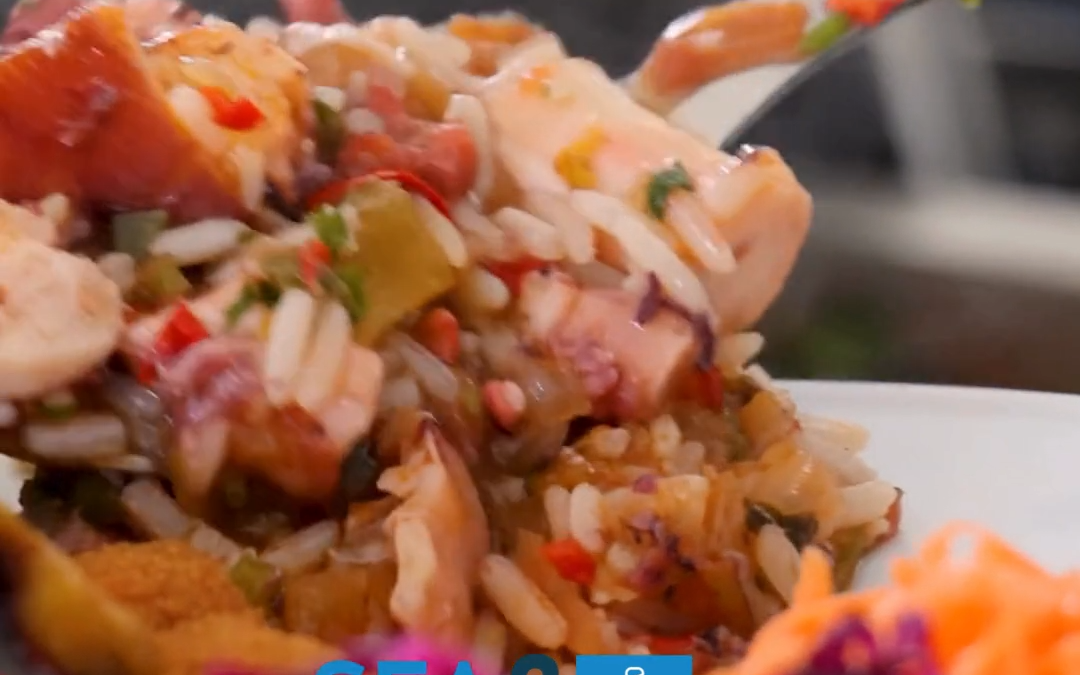
Last Friday, March 27, the University of the Algarve served octopus from Fuzeta for the first time at its university restaurant, demonstrating that it is possible to trace seafood from its origin to the point of consumption, and showcasing the traceability app developed by the SEA2SEE project. The event focused on the concept of traceability – the ability to track seafood from its origin to the final consumer. In the case of octopus from Fuzeta, traceability plays a critical role in combating overfishing, preventing illegal or unreported catches, and empowering consumers to make informed and responsible choices.

Open to the entire community, the lunch event provided an excellent opportunity to present our traceability app that allows consumers to know which boat caught the octopus they were eating and to follow every step of its value chain, simply by scanning a small QR code.
Ultimately, promoting sustainable octopus’ consumption is not just about preserving a single species – it is about protecting marine ecosystems and ensuring that future generations can continue to benefit from ocean resources. Traceability represents a powerful step in that direction, and this event marked an important milestone in raising awareness and driving action.
Check more of the SAE2SEE tehcnological results here