
Authors:Gisela Costa, Cristina Pita, Sofia Alexandre, Katina Roumbedakis, João Pontes, Michelle Hübel, Mafalda Rangel
ABSTRACT:
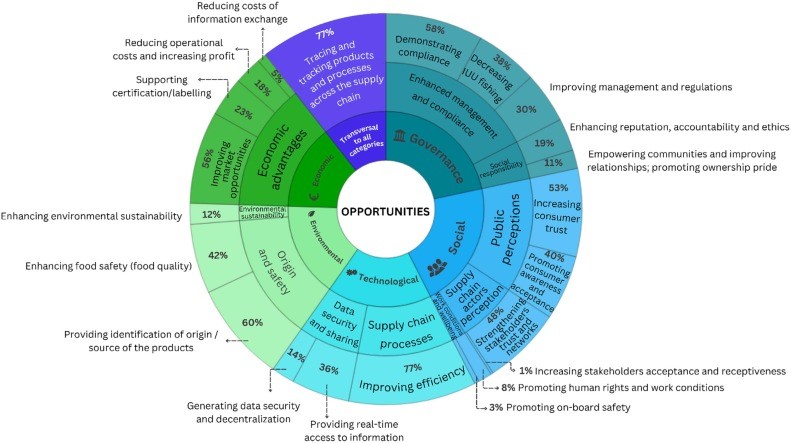
Aquatic foods are among the most extensively traded food commodities globally, with increasingly complex supply chains and rising consumer demand for sustainable, ethically sourced, and legally compliant products. In this context traceability systems have emerged as vital tools for enhancing transparency, accountability, and resilience within these supply chains. This study presents a systematic review of the literature to identify key challenges and opportunities associated with the implementation of digital traceability systems in aquatic food supply chains. The review synthesizes evidence on diverse technologies, governance frameworks, and supply chain dynamics. The findings reveal that while technological innovation, such as blockchain and digital traceability platforms, show promising solutions for improving data management and efficiency, and enhance consumer trust, several barriers persist. These include high implementation and maintenance costs, technological barriers (e.g., complexity of data management and usability), stakeholder disinterest, unequal access to digital infrastructure, gaps in international cooperation and regulatory frameworks, and issues of system interoperability. Conversely, traceability presents multiple benefits, including enhanced supply chain efficiency, market access, stronger stakeholder collaboration, and alignment with consumer preferences for sustainable products. It also contributes to combating Illegal, Unreported, and Unregulated (IUU) fishing, enhancing fair labour practices, and promoting compliance with international standards. We conclude that inclusive, context-specific approaches (tailored to the diverse characteristics of fisheries, aquaculture, and small-scale operations) and cross-sector collaboration are essential to address the challenges inherent in globalized supply chains and realize the full potential of traceability systems in advancing more sustainable, transparent, and resilient aquatic food systems.
Follow the link to read the full paper published in Marine Policy: https://doi.org/10.1016/j.marpol.2026.107154