
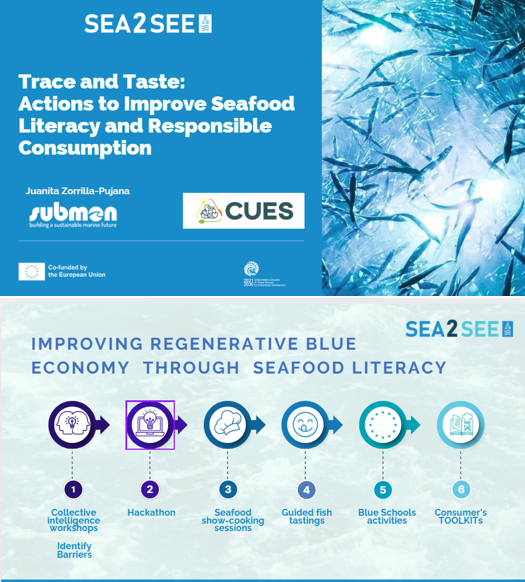
On 13 January 2026, theCUES Joint Webinar “Understanding What Shapes Sustainable Consumer Behaviour” brought together eight EU-funded projects working at the forefront of sustainable consumption to share insights, outcomes and practical lessons on what drives people to make more sustainable food choices. The session was an excellent opportunity to connect across initiatives and explore how education, communication, digital innovation and systemic transparency can influence consumer behaviour.
A Cross-Project Exchange on Change
The webinar highlighted the diverse approaches and tools being developed to foster more responsible consumption. While each project approaches the issue from its own angle, there were shared themes that emerged across interventions and discussions:
- Focus on co-designing methods and persuasive cues to guide consumer behaviour – invest in learning communities, communication and behaviour change toolkits, and multi-actor participatory interventions with consumers, value chain actors and policymakers.
- Establishing co-creation living labs and exploring supply chain innovations, including sustainable business models, cultural heritage of seafood and engagement methods to stimulate positive consumer behaviour, including novel traceability approaches.
- Empower consumers with personalised and inclusive labelling strategies and digital innovations that address resistance to sustainability and support decision-making.
- All projects bring unique perspectives on transparency, food information, communication, data-driven systems and alternative market access models that contribute to the enabling environment for sustainable choices.
This cross-project interaction provided a richer understanding of how multi-sectoral efforts are essential to address the complexity of consumer behaviour.
Sea2See’s Perspective: Communication, Traceability and Engagement
From its perspective, Sea2See project presented the actions we developed and reflections on how to improve consumer behaviour towards sustainable and responsible consumption.
Across our activities, we see that:
🔹 Education and seafood literacy matter
Understanding where food comes from, how it affects the environment and what responsible options look like is a foundation for sustainable decisions. This requires clear, engaging educational content and campaigns that go beyond technical language.
🔹 Communication must be rigorous but engaging
Digital information platforms and social networks are not just channels for content; they are spaces for conversation, building trust and community engagement. Rather than one-way messaging, we need ongoing dialogue with consumers, stakeholders and partners.
🔹 Traceability and transparency help bridge trust gaps
Tools like blockchain-enabled traceability can make sustainability claims more trustworthy and accessible. When consumers can see the origin, certification and path of a product, they are more confident in the choices they make, especially when this information is presented in a clear and user-friendly way.
🔹 Clear certifications and origin labelling support responsibility
Aligned with broader discussions at CUES and other projects, we believe that trusted label systems and transparent product information play a central role in guiding responsible consumption choices.
Final thoughts
What emerged during the webinar is that no single project or tool can create change alone. Rather, it is the convergence and continuity of efforts across education, communication and digital innovation, such as traceability systems and policy dialogue, that will help move consumer behaviour towards sustainability. Events like this demonstrate the value of cross-project learning, and SEA2SEE remains committed to continuing these conversations and collaborations.
It was a really inspiring exchange, and for everyone who continues to work together towards a more informed, engaged and responsible European food system!
Contributor: Juanita Zorrilla, SUBMON