
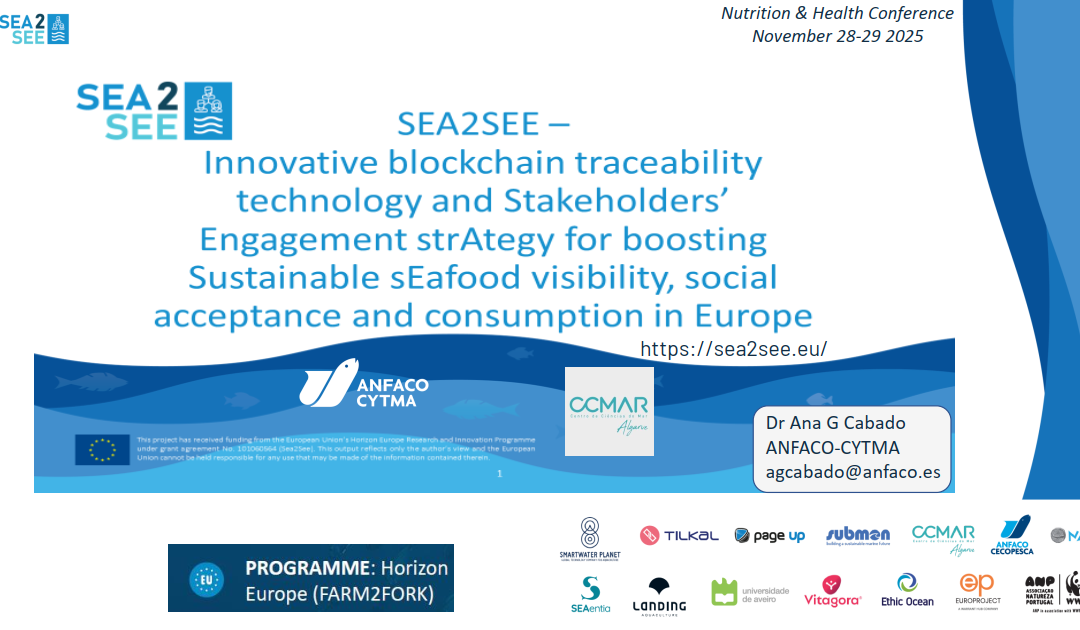
On 28–29 November 2025, SEA2SEE partner ANFACO-CYTMA took part in the International Conference on Nutrition & Health 2025, held online under the theme “Innovating Nutrition Science for Global Wellness”, hosted by Globemeet Research Conferences.
The International Conference on Nutrition & Health 2025 is a premier forum for advancing evidence-based nutritional solutions. This year’s event featured keynote presentations by WHO nutrition advisors and peer-reviewed tracks focusing on sustainable food systems and functional foods. The conference brought together researchers, clinicians, public health experts and industry representatives from more than 60 countries. Over two days, participants followed keynote presentations from WHO nutrition advisors, oral communications across a wide range of thematic tracks, interactive poster sessions, and a virtual exhibition focused on nutraceutical innovations and evidence-based nutrition.
SEA2SEE project was represented by Ana Garcia Cabado, from ANFACO-CYTMA, who presented the talk ‘Quality, safety and nutritional value of the Algarve octopus (Octopus vulgaris)’. Her contribution focused on the results of the Algarve octopus, showcasing it as a high-quality seafood resource, highlighting its nutritional profile, safety, and relevance in Mediterranean and Atlantic diets, outlining how high-quality seafood can contribute to both human health and sustainable coastal economies.
In her presentation, she described the Algarve octopus as a particularly nutrient-dense food, rich in high-quality protein and essential amino acids, as well as beneficial fatty acids that support cardiovascular health, help modulate inflammation and contribute to healthier cholesterol levels. She also underlined its high content of vitamins B8 and B12 and minerals such as magnesium, copper, selenium and phosphorus, all of which are important for energy metabolism, immune function and overall wellbeing, making octopus a compact and valuable option for healthy diets.
Beyond nutrition, Ana Garcia Cabado stressed the link between octopus’ consumption and sustainability. She underlined the role of artisanal octopus’ fisheries in the Algarve in supporting both environmental balance and the economic resilience of coastal communities. This combination of nutritional benefits, sensory appeal and responsible fishing practices demonstrates how marine foods like octopus can contribute to healthier and more sustainable food systems worldwide.